

Unsightly dimples as you prepare for destination Sunshine?
Environ®'s Intensive Body Profile is a Body Toning Gel formulated to smoothen, tighten and condition the skin. It assists with improving the appearance of uneven skin surface on areas such as the legs, buttocks, stomach and upper arms.
It contains a number of active ingredients such as Myriceline™, which is involved in 3 metabolic processes relating to fat strorage - Adipongenesis, Lipolysis and Lipogenesis. These processes serve to decrease the development of mature fat cells, increase the destruction of accumulated fat and avoid the creation of new fat deposits. Pronalen Modeling™ assists with body remodelling, smoothing and refirming and contains Guarana (Paullinia Cupana Seed Extract) which activates blood circulation.
These ingredients help eliminate excess fluids and strengthen the moisture barrier properties of the skin boosting the skins elasticity. Body Profile assists in the reduction of the "orange peel effect" or uneven skin surface often associated with cellulite and helps to remodel the skin while firming it and leaving it healthier and smoother. Suitable for home and professional use, this product is easily absorbed and fragrance free. Body Profile lasts twelve (12) months unopened and should be used within 6-8 weeks after opening.
Not to be used on the face and dècolletè.
Best used in conjunction with daily dry skin brushing for better absorption and to kick-start the lymphatic
system. As well as Skin Pure from Advanced Nutrition Programme


Monday, 25 July 2011
Wild Greens
I just loved this post on Etsy today and sadly there was no link to post it on so I have cut and pasted to share... Certainly some salad inspiration for the week!
Story by sarahhuck
Published on July 12, 2011 in Make
Photo by Campfire Cookery
Do the woods beckon you to explore? The next time you venture into the outdoors, leave behind that can of beans and bag of marshmallows; let the forest be your salad bar! Consider Jaimee Young and Sarah Huck, authors of Campfire Cookery: Adventuresome Recipes and Other Curiosities for the Great Outdoors, your intrepid guides into foraging for edible greens in the wild. For this week’s How-Tuesday post, they’ll teach you how to make a delectable salad from freshly scavenged greens.
(And, if you’re city tied, fear not! We have a special urban foraging post on the horizon!)

Foraging for Greens of the Wilderness

The seventeenth-century poet Robert Herrick famously implored us to “gather ye rosebuds while ye may.” For, he explained, “Old Time is still a-flying; and this same flower that smiles to-day, To-morrow will be dying.” Trade “salad greens” for “rosebuds,” and we couldn’t agree more.
We are a society said to have evolved from groups of hunter-gatherers, yet we now spend our time hunting for parking spots at the supermarket, then gathering cartloads of prepackaged goods. It’s much more pleasant to take a walk on the wild side, with a canvas satchel ready to be filled with the edible forest foliage one spies along the way.
The shocking truth is that tasty roughage such as purslane, miner’s lettuce, wild arugula, or dandelion greens is so prolific in the great outdoors that certain government agencies have classified them as pernicious weeds. But what do bureaucrats know of the joys wilderness greens can bestow? Flavors peppery to sweet are the signature of these discovered delicacies. But take warning: when foraging for forest greens, do go wild but not with abandon. Adhere to the forager’s code: Never take more than is
necessary; leave at least two-thirds of one’s verdant quarry for the next lucky salad seeker. Never rip the plants out by the roots, but snip off the tops with a dainty pair of shears so the harvest will return the next season. And to answer the question, should one bother to wash one’s foraged greens? We reply with a question of our own: Does a bear wee in the woods?
necessary; leave at least two-thirds of one’s verdant quarry for the next lucky salad seeker. Never rip the plants out by the roots, but snip off the tops with a dainty pair of shears so the harvest will return the next season. And to answer the question, should one bother to wash one’s foraged greens? We reply with a question of our own: Does a bear wee in the woods?
Naturally, one ought never to eat what one cannot absolutely and positively identify. To that end, we present a truncated guide to greens of the forest. We hope it will inspire you to invest in a more comprehensive encyclopedia to further the quest to gather salad greens while you may (for tomorrow they may be encased in plastic and sold for a small fortune at a boutique market).

2. Miner’s Lettuce (Claytonia perfoliata). This lovely green, also sometimes called spring beauty, emerges from February to June in shady areas of North America. It is known for its rosette-like leaf adorned by a tiny white bloom at the center. It got its name because it was so widely enjoyed by
those who journeyed to California in a rush for gold. They sought riches of gilt and found a leaf rich in vitamin C. The forty-niners may have suffered financial disappointment, but at least they didn’t have scurvy.
those who journeyed to California in a rush for gold. They sought riches of gilt and found a leaf rich in vitamin C. The forty-niners may have suffered financial disappointment, but at least they didn’t have scurvy.
3. Wild Arugula (Eruca sativa). This wild green will certainly give its cousin, domesticated arugula, an inferiority complex. For it is everything that tamed arugula is, but more so. Its radish-like flavor is even bolder; its looks are similar, but it has more jagged leaves, a more pronounced stem, a deeper, more emerald color. It is mostly found in the Mediterranean, where the ancients sang its praises as an aphrodisiac. Gather ye wild arugula for wild amour.
4. Dandelion Greens (Taraxacum officinale). The tell-tale yellow flower is easily spotted, though the greens are really at their most tender and flavorful just as they emerge from the earth, before they have had a chance to blossom. The name dandelion comes from the French dent de lion (“lion’s tooth”) and, indeed, the leaves are reminiscent of jagged rows of predatory fangs. This is a green with bite; its bitter, piquant flavor is at its best after with a gentle sauté over the fire.
5. Chicory (Cichorium intybus). Closely related to the dandelion green, chicory also has leaves with toothy edges; it can be distinguished by the bright blue flowers and sparse down upon its leaves. For salad, one should harvest chicory leaves early in spring, before its tender shoots have been corrupted by sultry summer. Like dandelion, chicory leaves are also good sautéed. The roots may be roasted, ground,
and used as a convincing substitute for coffee, if one doesn’t mind the missing jolt of caffeine.
and used as a convincing substitute for coffee, if one doesn’t mind the missing jolt of caffeine.
6. Sorrel (Rumex acetosa). Should one wish to lunch like a butterfly, sorrel would be one’s first choice; certain species’ larvae feast on this tangy green. The plant boasts juicy stems and leaves shaped like arrowheads — appropriate, considering sorrel’s sharp taste. It makes an excellent, lemony soup, though we enjoy the vibrancy it lends to an otherwise mild mix of salad greens. It flourishes in grassy
fields and woods.
fields and woods.
7. Watercress (Nasturtium officinale). Once a domesticated plant, watercress is such an enthusiastic breeder that it now thrives in the wild. As its name suggests, watercress can be found growing in streambeds and creeks, and even in damp roadside ditches, though we imagine ditch cress
to be rather steeped in petrol fumes. Watercress consists of a thick stem that can be eaten or not, and small, roundish leaves. It is an astoundingly nutritious plant and can be served nearly any way one wishes: sautéed, steamed, boiled, or raw. We find its flavor mildly peppery.
to be rather steeped in petrol fumes. Watercress consists of a thick stem that can be eaten or not, and small, roundish leaves. It is an astoundingly nutritious plant and can be served nearly any way one wishes: sautéed, steamed, boiled, or raw. We find its flavor mildly peppery.
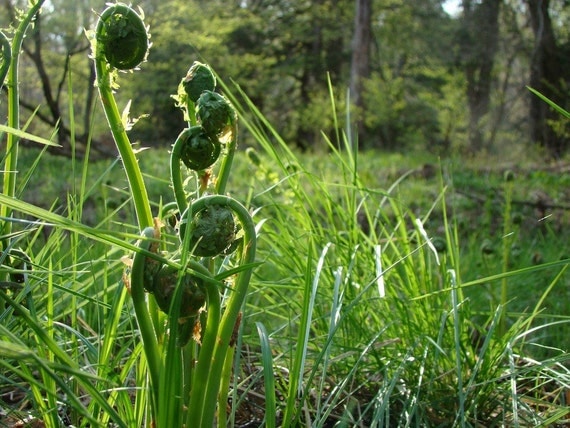

How to Make a Wild Salad
Ingredients for 4-6 portions:8 cups mixed wild greens, such as purslane, dandelion (best used sparingly, as it is bitter), arugula, sorrel, or miner’s lettuce)
Vinaigrette
Kosher salt, to taste
Freshly milled black pepper, to taste
Edible flowers (see below), for garnish, optional
Edible Blooms: If the notion of eating flowers calls to mind a pasture cow chomping on clover, it is
time to revise one’s thinking. A colorful blend of delicate blossoms instantly makes a salad of simple mixed greens more elegant, and depending upon the chosen blooms, will add lemony, peppery, tart, or honeyed flavor. Before dashing off to the nearest meadow, take note: not all flowers are edible. Pluck only those you are certain can be safely digested, such as violet, hyssop, borage, calendula, lilac, nasturtium, dandelion, pansy, and marigold. Remove all pistils and stamens before eating and avoid any flowers suspected to have received pesticide treatment.
Directions:
Tear the greens into bite-size pieces and drop them into a large salad bowl. Pour enough dressing over the salad to lightly coat the greens. We prefer a wild salad to be austerely dressed; too much accessorizing can distract from its simple beauty. A drizzle of lemon and oil are all that are needed here. Taste and adjust seasonings, if necessary. Garnish with edible flowers, if one strives for fanciness.
Enjoy!
Thank you to Sarah Huck and Jaimee Young and the good folks at Abrams Books for sharing this project with us. For more projects, recipes, and outdoorsy tips, pick up a copy of Campfire Cookery from Amazon or a local independent bookseller
Friday, 22 July 2011
Happy Week End
Some soaking.... 

with some shaded lounging & reading in my new swim attire!
If only....
Happy week-end wherever you are and whatever you do!
with some shaded lounging & reading in my new swim attire!
If only....
Happy week-end wherever you are and whatever you do!
What do your nails say about you?

LONG NAILS
- Are susceptible to lung and chest diseases.
- Long nails with a tinge of blue on the surface indicate weak constitution of health.
- Indicate the tendency for a weak heart.
- They lack strong action orientation.
- If a furrow is found, it is a clear indication of the bearer’s recent confrontation with a nervous disease.
- Visibility of white spots on the nails concludes fragility in health.
- Moreover, white flecks signify the disruption of the whole nervous system and possible zinc deficiency
- Very flat nails signify a danger of paralysis.
- When form of a shell they conclude paralysis.
- Appearance of blue color and disappearance of moons indicate that the disease is in advanced stage.
- Indicate spinal fragility.
- Large moons signify sturdiness in health.
- Moons are generally associated with blood circulation.
- However, bizarre moon size indicates excessive pressure of blood.
Thursday, 21 July 2011
Exclamation! Swimwear Sensation...!!

So despite us Brits having ZERO summer coming up to end of July, I thought investing in some swimwear may be a good omen, as of course it can't get any worse!
So first up is my new purchase, after the citrine necklace from thevamoose.com, its a fabulously fun orange one piece with what looks like white hearts, but are not!
All the above groovy pieces are on sale at Whistles NOW for half the price!
Great fit which inspired a speedy sprint to the nearest Self Tan booth in Chiswick!
Available from Whistles and pictures courtesy of sheerluxe.com
Monday, 18 July 2011

 |
| It all starts with a do it yourself salt scrub! |





And ends in a relaxation space upstairs consisting of the most divine water bed loungers.
These are most welcome after the extremes of temperature
from various sauna's to steam rooms, aroma pools, light therapy rooms and plunge pools!
Just when you thought things could not get any better...
a glass of bubbles arrives and after this we venture into the dream
and wave therapy rooms where we quietly doze before heading
back to reality in London!
Spa Amsterdam Zuiver
Koenenkade 8 (Amsterdam Forest)
1081 KH Amsterdam
The Netherlands
T +31 (0)20 301 07 10
F +31 (0)20 301 07 08
E info@spazuiver.nl
Pictures courtesy of google images.
Friday, 15 July 2011
Hooray for Friday!

Whatever you get up to this week end make sure it's fun! End of the school term beckons some rest and recuperation! I am off to a wedding in Amsterdam and on Sunday some R&R at Amsterdam's Zuiver Spa! Watch this blog next week for the outcome...
Subscribe to:
Posts (Atom)